





Eye For Film >> Movies >> Displace: The Battle For Dublin (2026) Film Review


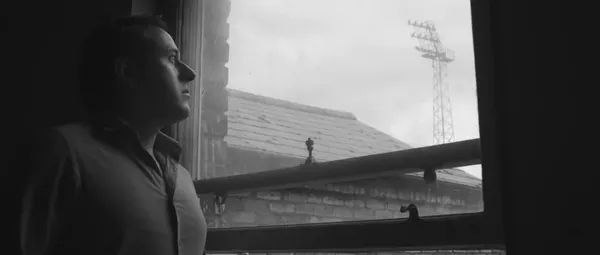

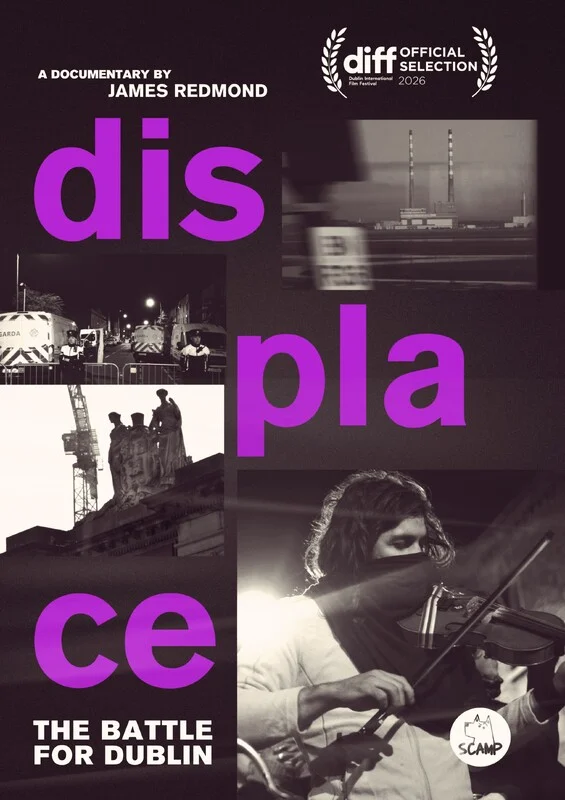
Opening with a quote from James Joyce, James Redmond’s documentary is full of the flavour of the city whose struggles it addresses. It is not merely about Dublin, but very much a product of it, filmed over four years, infused with the experiences of its residents and with stories of those who went before them. The choice to shoot in black and white places past and present on an equal footing. It also brings out shadows and textures which speak deeply to the city’s character. Here you will find that perfect fusion of specificity and ubiquity that is gold to documentarians.
Step by step we travel around the city, uncovering the stories of iconic places like the Iveagh markets, Moore Street, and the studios of Richmond Road. At the same time, we hear stories familiar from cities around the world: about managed decline enabling big companies to swoop in; about the breakdown of communities; the valuing and valuation of buildings-as-assets above buildings-as-homes. Corporate landlords conspire to create an artificial housing shortage which forces up rents and increases the value of their holdings. In the process, the people who tend to the city’s infrastructure are priced out, as are the creative talents whose output gave it the cachet used to attract the wealthy.
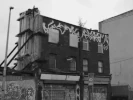
There is a pattern, we are told, of public amenities being promised be developers as a means of getting planning permission, then not being delivered, or falling far short in terms of quality. Young people feel infantilised, stuck in their parents’ homes, unable to start families of their own. Houses are left boarded up for months whilst whole families are crammed into single hotel rooms and treated as if the fault is with them. More people are coming to rely on food banks. A mean-looking seagull glares down from a lamp post. It too now scratches a living from the streets when it was made to wheel and shimmer in bright air.
Dublin is a city with spirit, its historic victories hard won. One woman remembers what the Iveagh markets meant to her mother and her mother’s mother; how trading there gave them freedom during a period when married women were barred from most forms of paying work. We meet an artist whose abrupt notice of eviction from his studio means he will have to have years’ worth of work destroyed because he simply has nowhere to store it. Small business owners on Moore Street discuss resistance to the corporation that wants to redevelop it, now that it has eased the path to doing so by letting it fall into ruin. This is not a place where people take such things lying down. CATU – the Community Action Tenancy Union – begins to make specific policy demands aimed at improving the situation for the city’s inhabitants. Other grassroots movements spring up, and emboldened individuals speak out.
Displace: The Battle For Dublin ends like a morality play missing its final act, but is more pertinent for that. There is no false resolution here. Instead, we find a rekindling of hope, a recovering sense of the value of ordinary human beings – and, in the process, a question emerges about the nature of cities. Are they collections of buildings, or concentrations of people, or something that emerges between the two? It has been said of Dublin that it was so invested with the spirit of ruthless capitalism and landlordism, even when the English left, that it never stood a chance of becoming what its people wanted; but Redmond’s film suggests that the battle has now been joined.
Reviewed on: 28 Jun 2026


Search database:
